
 MAP
MAP SEARCH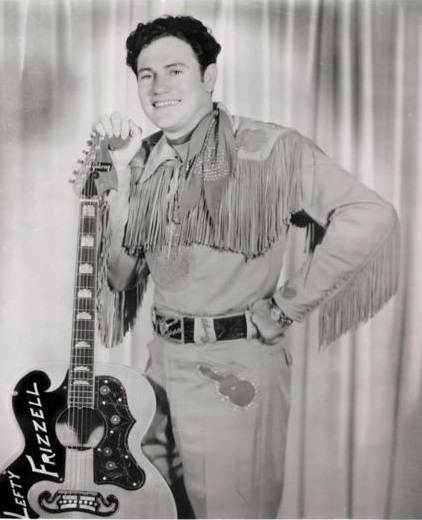
Public domain
Address
912 W Park Ave, Corsicana, TX 75110
GPS
32.094894654848, -96.475312814897
Telephone
Monday
8 AM – 5 PM (closed noon–1 PM)
Tuesday
8 AM – 5 PM (closed noon–1 PM)
Wednesday
8 AM – 5 PM (closed noon–1 PM)
Thursday
8 AM – 5 PM (closed noon–1 PM)
Friday
8 AM – 5 PM (closed noon–1 PM)
Saturday
10 AM – 4 PM
Sunday
–
SEE MORE IN:
Country music’s most imitated sound has a hometown. It’s Corsicana, Texas. That’s where David “Lefty” Frizzell was born in 1928. And the Lefty Frizzell Museum Corsicana, inside Pioneer Village on West Park Avenue, holds what he left behind.
Frizzell grew up in a Navarro County family that moved constantly. He taught himself guitar young and started playing honky-tonks as a teenager. By the early 1950s, he was recording for Columbia Records. And what he was doing with his voice was something nobody had heard before. He’d hold a syllable past the point where any textbook said to hold it. He’d slur across the beat. He’d sustain a vowel through an entire measure, letting the melody bend in ways that felt improvised even when they weren’t. “If You’ve Got the Money I’ve Got the Time” and “I Love You a Thousand Ways” both hit number one in 1950. He became the hottest act in country music for a full year.
The Voice That Made the Genre
Then Hank Williams got hot and the spotlight shifted. But Frizzell’s influence never stopped moving. Willie Nelson has cited Frizzell as his single biggest vocal influence. So has Merle Haggard. Dwight Yoakam studied Frizzell’s phrasing specifically. The style Frizzell invented in Corsicana honky-tonks filtered down through three generations of country singers. And it’s still filtering.
The museum holds his handwritten song lyrics, personal belongings, photographs, and mementos from his career. It’s a small collection. But it carries the weight of a genuinely enormous story. Corsicana gave the genre its most copied voice. Go pay your respects. For more North Texas country history, see Dallas: Charley Pride — the story of the man who dominated the country charts for twenty years from a home in North Texas.