MAP
MAP SEARCH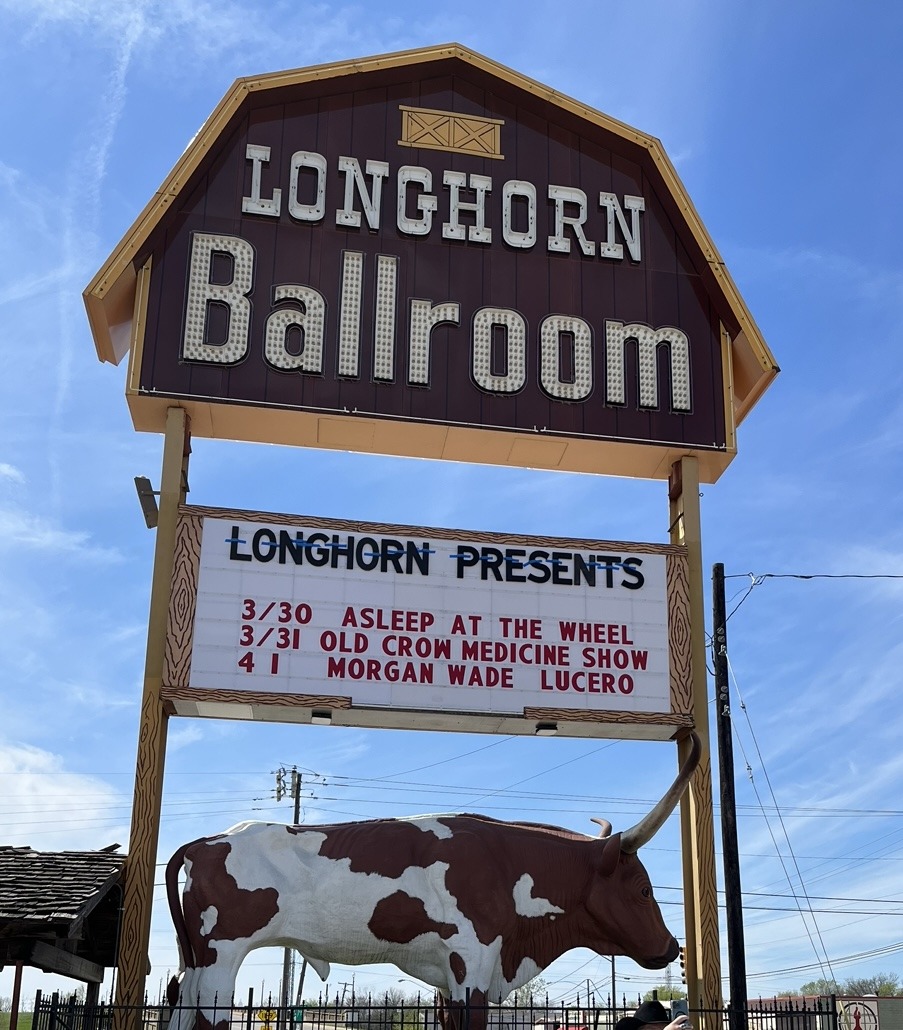
CC BY-SA 4.0, GusGrl33
Address
216 Corinth St, Dallas, TX 75207
GPS
32.76278, -96.81028
Telephone
Monday
–
Tuesday
–
Wednesday
–
Thursday
–
Friday
–
Saturday
–
Sunday
–
Hours vary by event; check website for upcoming shows
SEE MORE IN:
Dallas has torn down a lot of its music history. The Longhorn Ballroom is what survived.
The Longhorn opened in 1950 under the ownership of O.L. Nelms, a Dallas cattle trader who figured that if cowhands were going to spend money somewhere, it might as well be his. The building he built was enormous by the standards of the day — a cavernous honky-tonk at 216 Corinth Street, just south of downtown, with a stage large enough to host anyone who mattered in country music. Bob Wills played it. Hank Thompson played it. Lefty Frizzell played it before anyone outside of Texas knew who Lefty Frizzell was.
In 1958, Jack Ruby bought the Longhorn. The same Jack Ruby. He ran it as a country music and burlesque venue until 1963, booking acts and working the door himself. That particular chapter of the Longhorn’s history tends to get mentioned first, but the music was always the more interesting story.
Where Country and Punk Shared a Stage
The Longhorn’s most improbable moment came in 1979. The Sex Pistols played the Longhorn Ballroom on the third date of their only American tour — a booking so counterintuitive that it became legend. Cowboy hats and safety pins occupied the same room, separated by mutual bewilderment. Consequently, the Longhorn earned a kind of dual mythology: sacred ground for both honky-tonk traditionalists and punk historians.
Willie Nelson headlined there regularly through the 1970s and 1980s. Loretta Lynn, Merle Haggard, and George Strait all played the stage before Strait was a household name. The Longhorn was where careers got confirmed, not just launched — if Dallas country audiences accepted you at the Longhorn, you had earned something real.
A Landmark Restored
The venue closed in the early 1990s and spent years in disrepair, its fate uncertain amid various redevelopment proposals for the area. Nevertheless, preservationists and music advocates kept pushing for its survival, and the Longhorn eventually underwent a serious restoration. The building’s distinctive longhorn steer sign — a Dallas icon — was among the elements brought back.
Today the Longhorn Ballroom operates as a concert and event venue, hosting a mix of country, Americana, and Texas music acts that fit its heritage. The room still holds over 2,000 people, and the acoustics reward a full house. For a deeper look at Texas dance hall culture, Floore’s Country Store in Helotes represents a different flavor of the same tradition — more Hill Country, less stockyards, but equally essential.
The Longhorn Ballroom is one of those places where the weight of what happened inside still registers. You can feel it in the size of the room and the scuff marks on the floor.
Upcoming Concerts at Longhorn Ballroom
- Dallas: Band of Heathens at Longhorn Ballroom — Fri, Nov 20, 2026 8:00pm