
 MAP
MAP SEARCH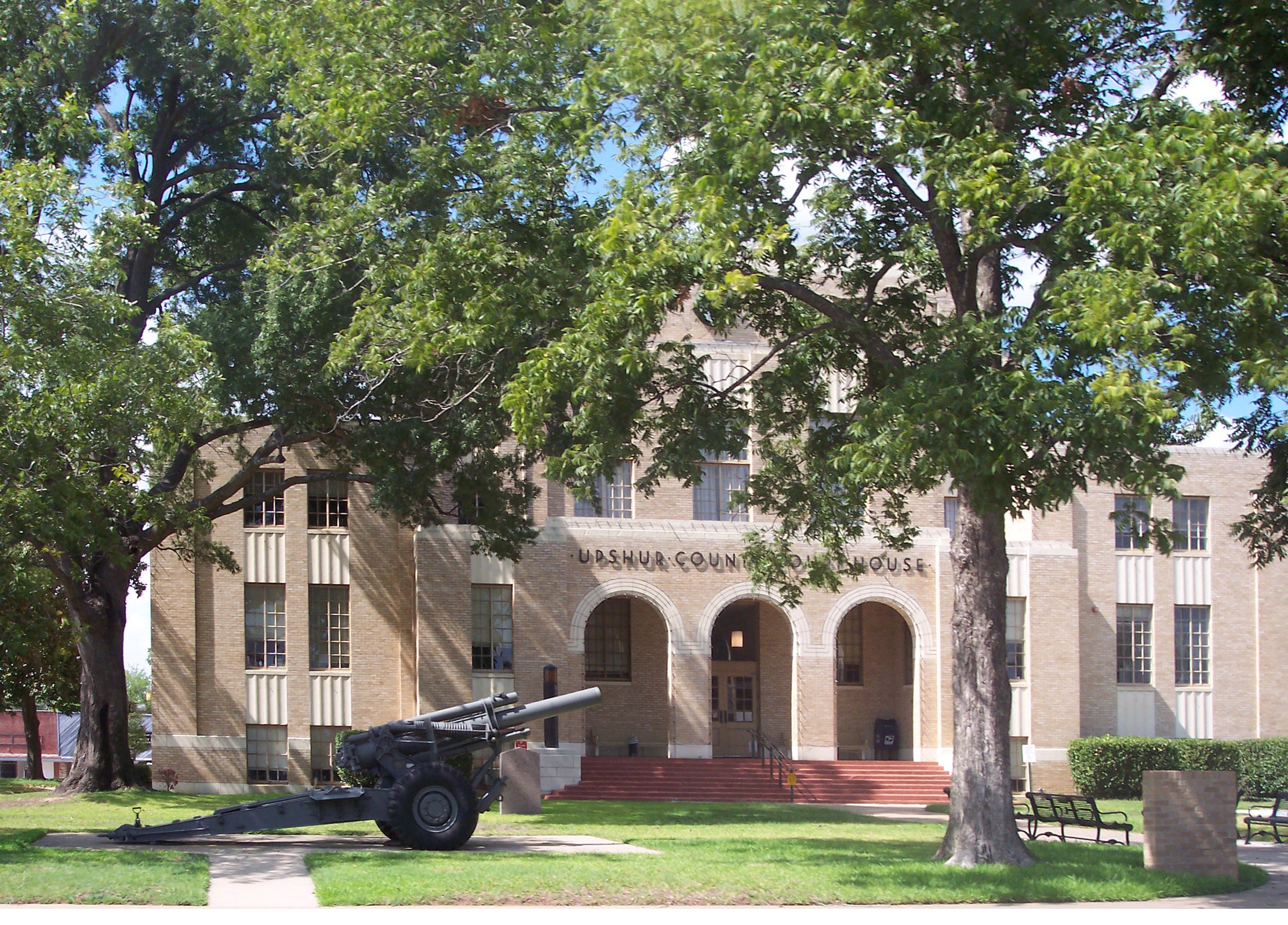
Upshur County Courthouse, Gilmer, Texas. Public domain.
Address
Gilmer, TX 75644
GPS
32.7357, -94.9477
You went to see Freddie King to have your ass kicked. That was the deal. He was the AC/DC of East Texas blues — and it all started in the Upshur County pines outside Gilmer.
Freddie King was born in Gilmer on September 3, 1934, the son of Ella Mae King, who played guitar, and J.T. Christian. The Piney Woods of Upshur County were logging country, cotton country, hardscrabble country — the kind of place where the music was loud because it had to compete with everything else. King’s mother and his uncle started him on guitar before he was ten. He was playing in local Gilmer juke joints by his early teens, absorbing the fast, aggressive East Texas style that ran through Cass County and Harrison County and Upshur County like a current.
At sixteen, King moved to Chicago. It was 1950. Chicago’s South Side blues scene was the best postgraduate program American music offered, and King enrolled hard — sitting in at clubs, learning from Muddy Waters and Howlin’ Wolf, absorbing the electric Chicago sound and fusing it with what he’d brought from Gilmer. The result was something new: bigger, louder, more physically overwhelming than either source alone. He recorded “Hideaway” in 1960 — an instrumental that peaked at No. 29 on the Billboard singles chart in 1961 and became one of the most-played blues songs in history. Eric Clapton, Stevie Ray Vaughan, and every serious blues guitarist who followed learned it. “Hideaway” is a license to play the blues.
King was called the Texas Cannonball because no other description fit. Six feet tall and two hundred and fifty pounds, with hands so large they could reach notes a normal guitarist couldn’t dream of — and the technique to use every advantage. His 1966 UK tour sold out every night. Peter Green of Fleetwood Mac, Clapton in Cream, Mick Taylor of the Stones: they all came to see him play and went home shaken.
Gilmer didn’t make him famous. Chicago did that. But the Piney Woods of Upshur County made him a guitarist — gave him the speed, the aggression, and the understanding that music in East Texas was a physical event, not a spectator sport. He died in Dallas on December 28, 1976, at forty-two. The T-Bone Walker birthplace in Linden — just a county away through the same pines — is where East Texas’s other great guitar revolution started.