MAP
MAP SEARCH
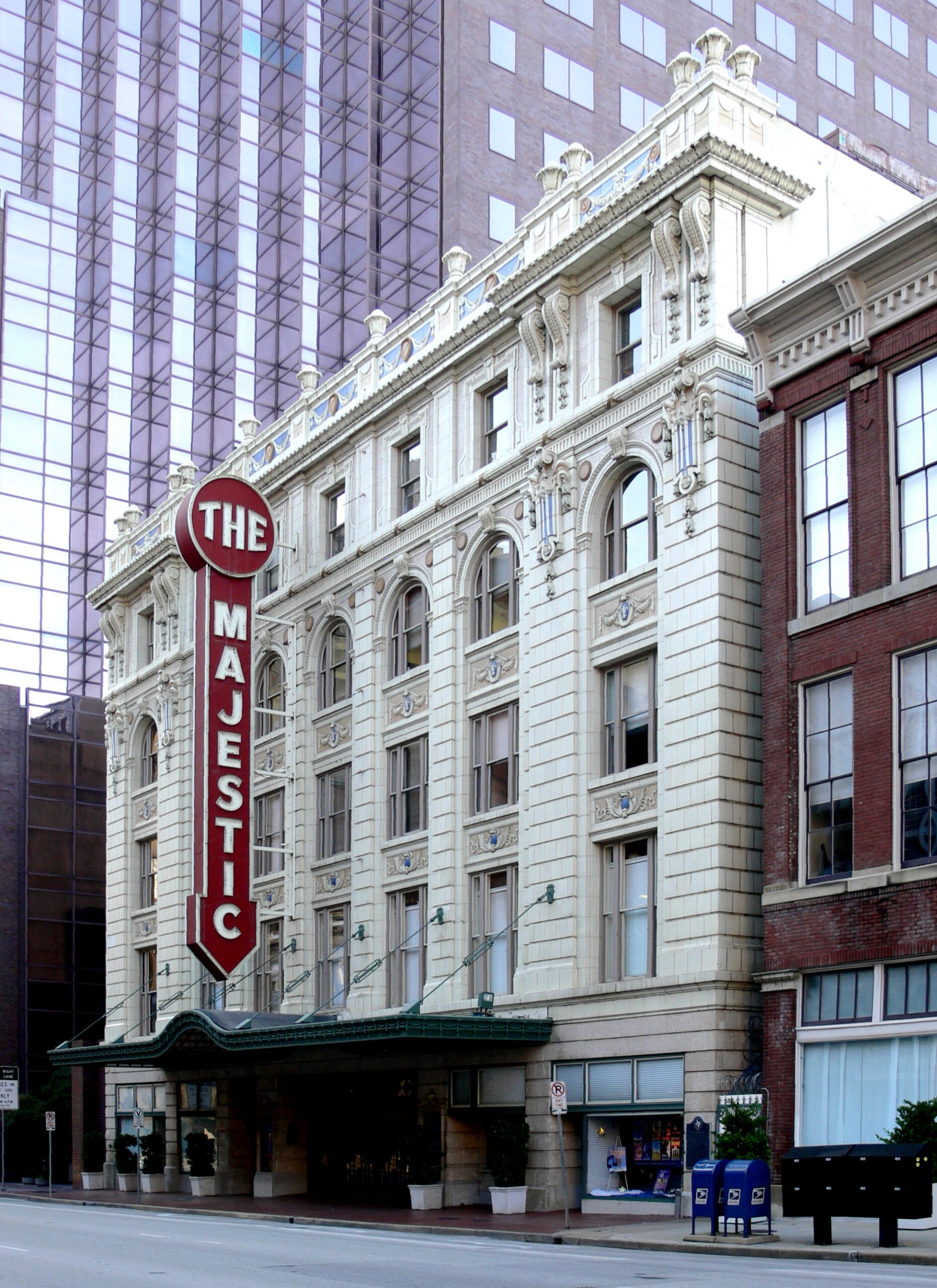
Photo: JVanT, CC BY 2.0, via Wikimedia Commons
ADDRESS & CONTACT
The Majestic Theatre on Elm Street is the third Dallas theater to carry the name — the first burned down in 1916 — and the current building has anchored downtown Dallas since it opened on April 11, 1921, under the direction of showman Karl Hoblitzelle.
A $2 Million Vaudeville Palace
Designed by noted theater architect John Eberson in a Renaissance Revival style, the Majestic was built around an “atmospheric” ceiling meant to evoke a twinkling night sky, Corinthian columns, and a Kilgen theater organ, at a cost of nearly $2 million in 1921 dollars. It opened as a flagship vaudeville house, added film screenings the following year, and by 1932 had become an exclusive movie theater — one that hosted Harry Houdini, Mae West, Bob Hope, Jack Benny, and Duke Ellington across its stage in various eras. The Majestic closed as a cinema in July 1973, after a final screening of “Live and Let Die.”
Restored as a City-Owned Stage
The Hoblitzelle Foundation donated the building to the City of Dallas at the end of 1976, and after a multi-year restoration it reopened in January 1983 as a performing-arts venue, now run by the City of Dallas Office of Arts and Culture. Its five-story lobby, with Vermont-marble floors, twin marble staircases, and an ornate cage elevator, remains one of the most elaborate rooms of any concert venue in North Texas, and the Majestic was added to the National Register of Historic Places in 1977.
Today the 1,570-seat Majestic hosts touring Broadway, comedy, and concerts in the heart of the Dallas Arts District, a short walk from the Kessler Theater across town in Oak Cliff — together the two rooms bookend Dallas’s mix of grand historic stages and neighborhood listening rooms. Being a fully seated theater, the Majestic is best suited to shows where a ticket buys an actual seat, not standing room.