MAP
MAP SEARCH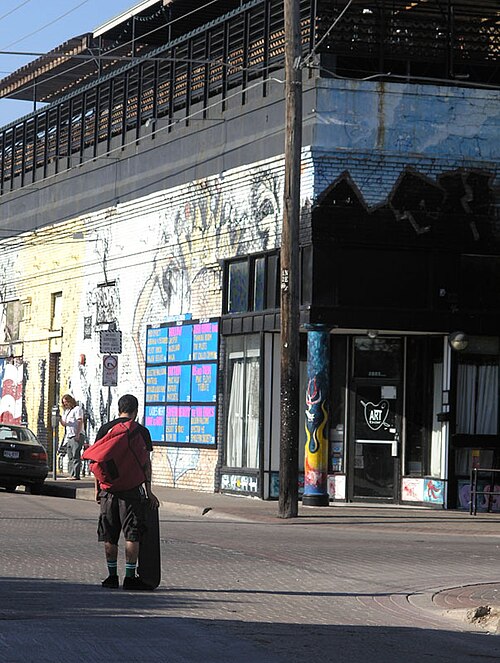
ADDRESS & CONTACT
Address
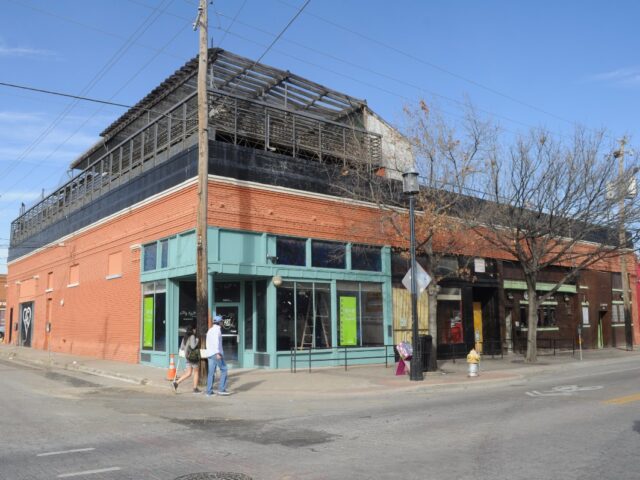
2528 Elm Street, Suite A, Dallas, TX 75226
GPS
32.784638384185, -96.785792420853
Telephone
HOURS
Monday
–
Tuesday
–
Wednesday
Noon – 7 PM
Thursday
Noon – 7 PM
Friday
Noon – 7 PM
Saturday
Noon – 7 PM
Sunday
Noon – 7 PM
Wednesday–Sunday, Noon–7pm. Free guided walking tour every Saturday at 3pm.
SEE MORE IN:
Every great American music city has a ground zero. For the Deep Ellum Dallas music scene, it has always been Elm Street.
In the 1920s, Blind Lemon Jefferson played on these corners for coins. Lead Belly, meanwhile, slept in nearby rooming houses. The young T-Bone Walker led Blind Lemon Jefferson through these streets for tips. He was learning the blues at the feet of a master. Robert Johnson passed through on his way to infamy. Bessie Smith and Lightnin’ Hopkins played the clubs. The music made on this stretch of Elm Street shaped the blues. And through the blues, it reshaped nearly every form of popular American music that followed.
Today, the Deep Ellum Community Center at 2528 Elm Street collects that story and makes it permanent. The centerpiece is “When You Go Down in Deep Ellum,” a permanent exhibition spanning 150 years of the district’s history. It moves through four themes: Migration, Music, Business and Commerce, and Art and Culture. At its center sits a working 78 RPM recording studio, rebuilt and fully operational. It’s the only one of its kind in the nation.
The 78 RPM Studio
Playing a 78 RPM session is not a gimmick. It’s the closest you can get to understanding how early Texas blues actually sounded before it became legend. The Blind Lemon Jefferson recordings made around 1926 went to Paramount Records in Wisconsin. But they reached juke joints from Beaumont to Chicago within weeks of pressing. That studio format carried Deep Ellum music out of Dallas and into the world.
The Deep Ellum Community Center also features a listening room with curated recordings spanning the district’s entire arc. Alan Govenar curated the exhibition. His book Deep Ellum and Central Track is the definitive neighborhood history. He spent decades in these streets before writing it.
Free guided walking tours run every Saturday at 3 p.m. They follow the actual streets where the music happened. The tour covers the 2400 block of Elm. In 1969, a new highway elevation nearly obliterated that block—and the neighborhood with it. Many considered it the center of Deep Ellum.
Yet Deep Ellum has been declared dead so many times that it stopped flinching. The district survived urban renewal, a crack epidemic, and waves of club closures. It kept coming back—the way those Blind Lemon Jefferson records kept surfacing in crates from Dallas to Detroit. The Community Center is the latest act of survival. It’s also the first time someone put all of it in one place.