MAP
MAP SEARCH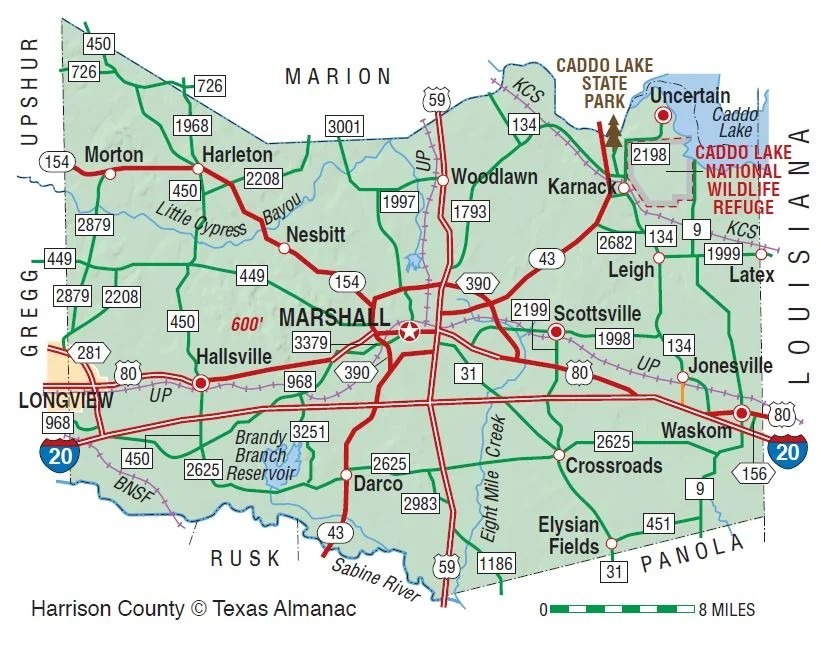
The most important piano music in American history didn’t start in a concert hall or a recording studio. It started in a shed in the East Texas woods, built by a lumber company to keep its workers from leaving camp on the weekend.
Harrison County, Texas, sits at the geographical center of gravity for the birth of boogie woogie. The lumber companies that arrived in the 1870s — drawn by the East Texas Piney Woods timber bonanza — set up barrelhouses in their camps: makeshift dance halls stocked with whiskey barrels, a plank floor, and an upright piano played by whoever could play it. These weren’t social clubs. They were instruments of labor control. If the men could drink and dance on Saturday, they might stay through Monday. The music was the incentive.
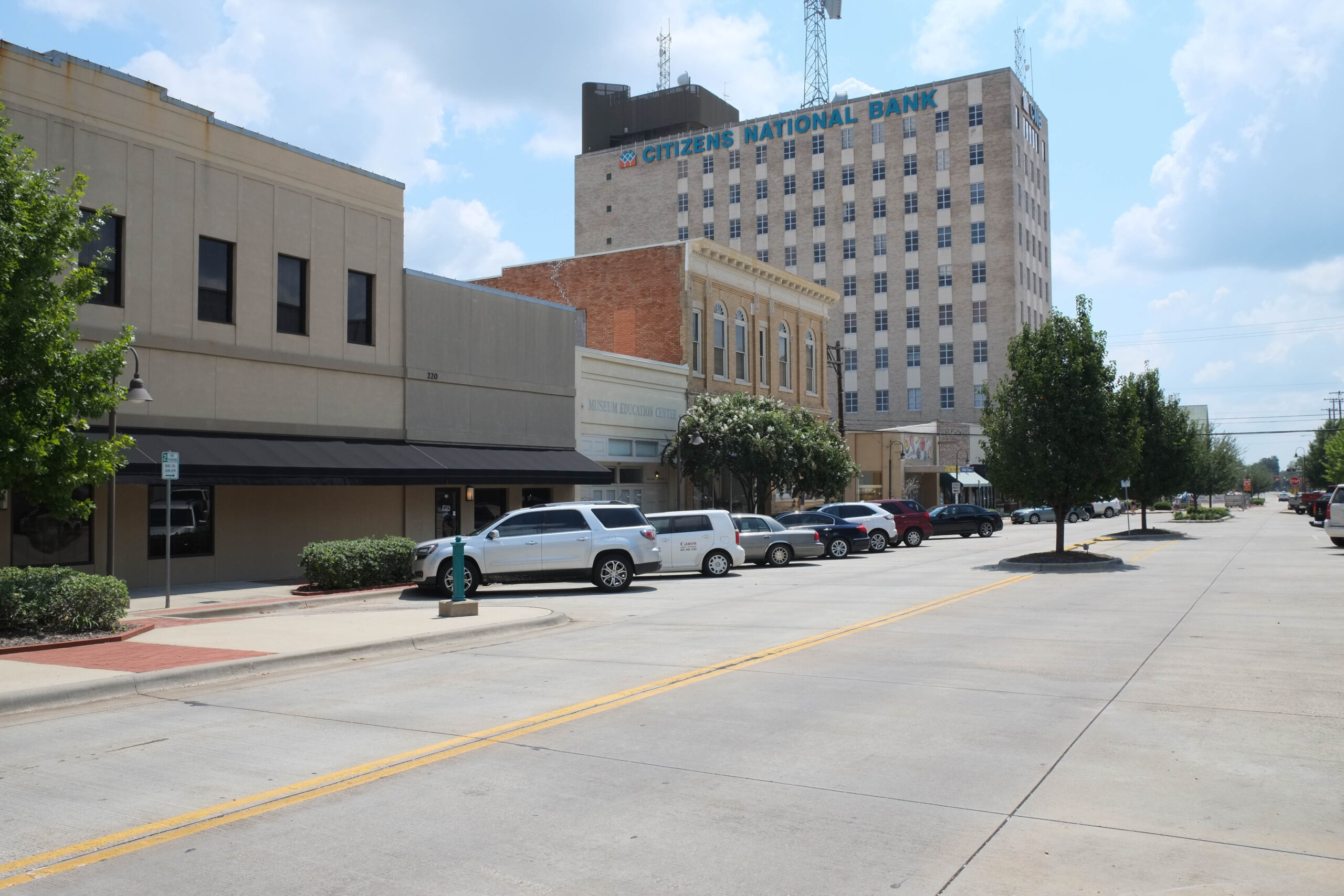
Marshall was the hub. As headquarters of the Texas & Pacific Railway, Marshall was the point where the railroad corridor ran deepest through Harrison County’s timber stands. The rail lines carried the lumber out and carried the musicians in — itinerant piano players who rode from camp to camp along what musicologist John Tennison would later call the “Boogie Woogie Highway.” The eight-beat bass figure they developed to keep people dancing — mimicking the rotation of a steam engine driver wheel — was already being called “Fast Texas” by the 1880s. By 1929, Clarence “Pinetop” Smith gave it the name “Boogie Woogie.”
Huddie “Lead Belly” Ledbetter grew up in Harrison County. His family purchased a farm here when he was ten, and he spent his formative years in the same landscape that was generating this music. He later said the bass figures he played on twelve-string guitar — the figures that influenced a generation of folk and blues musicians — came from what he heard in East Texas as a boy. The Harrison County barrelhouses were the school he never enrolled in.
A historical marker now stands at the end of North Washington Street in Marshall, near the 1912 Texas & Pacific Railway Depot, marking the city as the birthplace of boogie woogie. It’s a quieter kind of landmark than the music deserves — this was the headwaters of rock ‘n’ roll. The Swampoodle District in nearby Texarkana was playing the same style at the same time, a few miles up the same rail line.