MAP
MAP SEARCH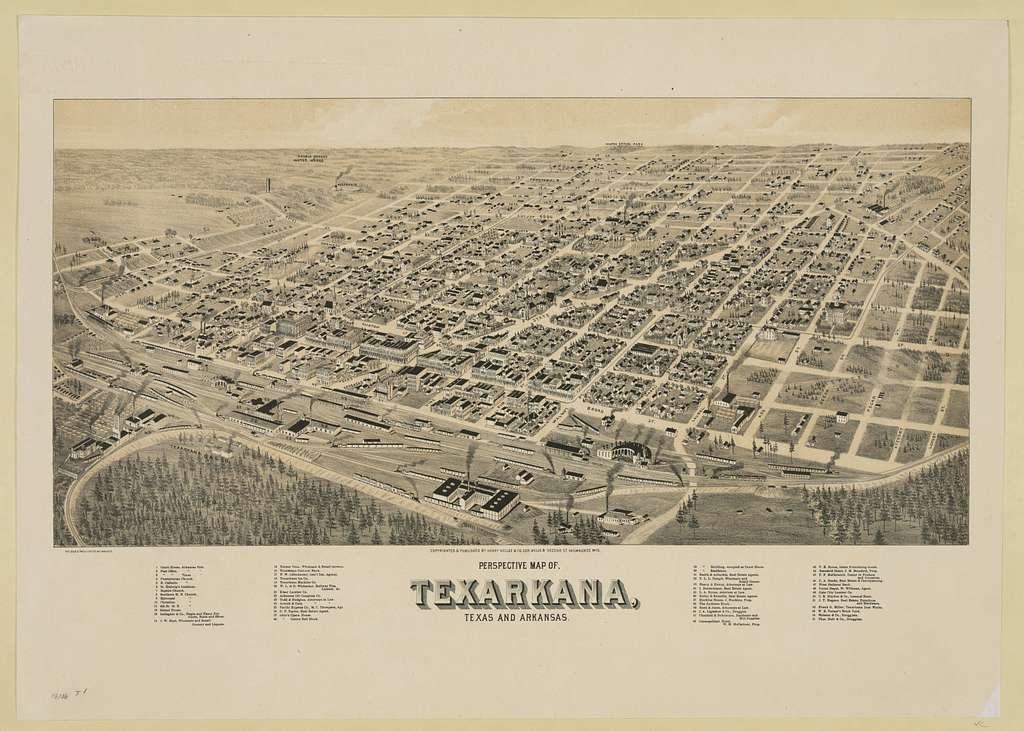
Nobody agreed on the exact boundaries of the Swampoodle District. What everyone agreed on was what happened there — and that the piano players who worked those juke joints changed the sound of American music.
The Swampoodle District ran along the west side of Texarkana, Texas, defined by Swampoodle Creek and its proximity to the railroad yards of the Texas & Pacific and the Kansas City Southern lines. From the first newspaper mention in 1884 through the 1950s, Swampoodle was the part of town where the rules bent: gambling, loud piano music, and dancing that ran until dawn. Brothels and barrelhouses sat shoulder to shoulder. Itinerant piano players rode the rails in, played until their hands gave out, and rode back out again.
The bass figure they left behind is why it matters. Researchers and local musicians from Texarkana have documented what the city’s oral history maintained for generations: the piano figure known as the “Swamp Poodle” — a broken-octave variant of the Texas & Pacific bass line — was developed right here, in the barrelhouses along Swampoodle Creek. That eight-beat figure became one of the most-used musical motifs in the history of popular music. You can hear it in boogie woogie, in early rock ‘n’ roll, in the bass lines of records made fifty years after the Swampoodle District had faded from the map.
Marshall was the hub of this same rail corridor. The lumber companies that arrived in the 1870s were pulling workers from hundreds of miles in every direction. The Swampoodle barrelhouses were where those workers spent their Friday nights and their wages, and where piano players sharpened the style that was already being called “Fast Texas” and “Fast Western” before it acquired the name boogie woogie.
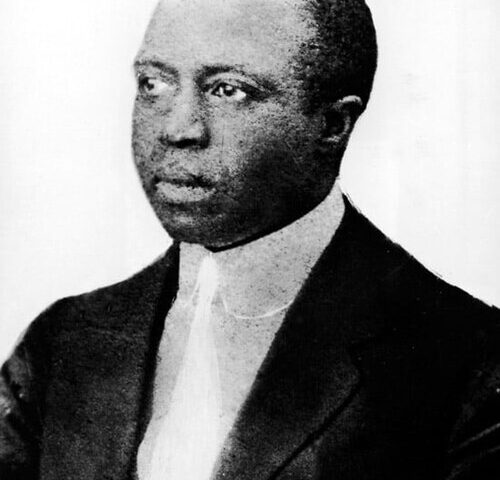
Scott Joplin grew up in Texarkana during these same years. He learned to play piano in town while the Swampoodle barrelhouses were at their loudest. He went on to become the King of Ragtime — and what he heard in Texarkana went into every note he wrote. The Harrison County barrelhouses down the rail line in Marshall were playing the same music at the same time, part of the same corridor that produced rock ‘n’ roll.