
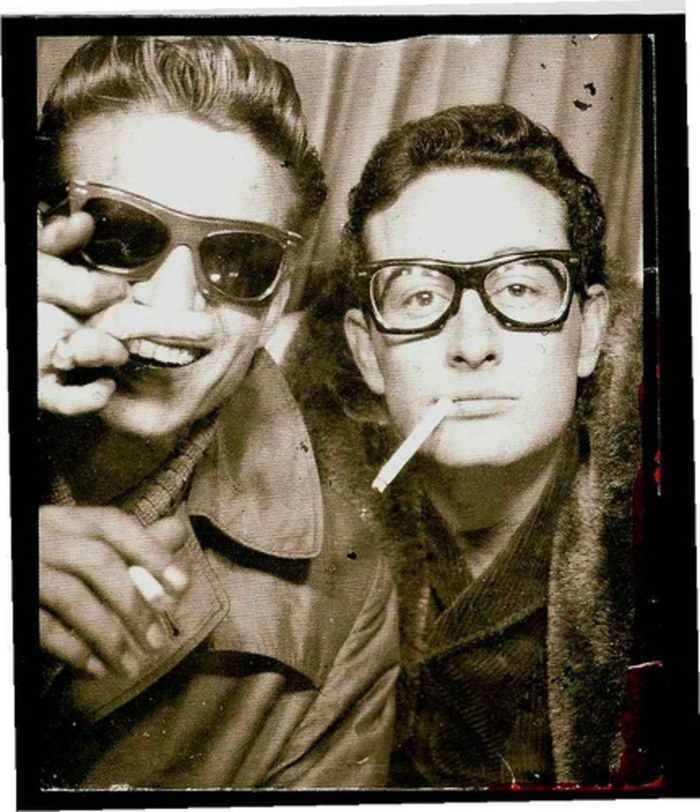
Four words. That’s all it took. On the night of February 2nd, 1959, Waylon Jennings said four words to Buddy Holly. Then Holly walked toward a small plane. And that was it.
Waylon Jennings was 21 years old, playing bass for Buddy Holly on the Winter Dance Party tour. The Buddy Holly plane crash would become known as the Day the Music Died. But for Waylon — born and raised in Littlefield, Texas — it was always more personal. It was four words he’d carry for the rest of his life.
🎧 Listen to Wanted! The Outlaws on Apple Music
The Winter Dance Party
The tour launched January 23rd, 1959, in Milwaukee, Wisconsin. Holly had recently produced Jennings on a handful of tracks and liked the kid. Before the tour, Holly had recorded “That’ll Be the Day” and “Peggy Sue” at Norman Petty’s studio in Clovis, just across the Texas line from Lubbock. And Waylon had grown up in Littlefield, 40 miles west of Lubbock — that same flat West Texas plain that shaped them both.
But the Winter Dance Party was brutal from the start. The tour buses broke down repeatedly in the Minnesota and Iowa cold. Heaters failed. Musicians played frostbitten shows to frostbitten crowds. One band member suffered frostbite on his feet. So Holly decided to charter a plane after a show in Clear Lake, Iowa — anything to escape that bus.
The Night in Clear Lake
On February 2nd, 1959, the tour played the Surf Ballroom in Clear Lake, Iowa. After the show, Holly chartered a 1947 Beechcraft Bonanza — three seats for himself, guitarist Tommy Allsup, and Jennings. Then J.P. Richardson, the Big Bopper, pulled Waylon aside. Richardson had a bad cold and wanted off the bus. He asked Waylon for his seat. And Waylon, being 21 and generous, said yes. Meanwhile, Ritchie Valens flipped a coin with Allsup for the third seat. Valens called it right. So all three of Holly’s band members ended up riding the bus instead.
When Holly found out Jennings was taking the bus, he gave him grief. “I hope your ass freezes on that bus,” Holly said, grinning. Waylon shot back without thinking. “I hope your ol’ plane crashes,” he said. Holly laughed. They shook hands. Then Holly walked toward the plane. The Beechcraft Bonanza took off from Mason City Municipal Airport in the early hours of February 3rd. Less than six miles from the runway, it went down into a frozen cornfield. All four onboard died: Holly, Richardson, Valens, and pilot Roger Peterson. Waylon Jennings heard the news the next morning. He was 21 years old. He was on the bus.
The Weight of a Joke
“God almighty, for years I thought I caused it,” Jennings said decades later in a CMT interview. He was afraid someone would find out what he’d said in that Iowa parking lot. “Somehow I blamed myself,” he recalled. “I hadn’t contributed anything to the world at that time compared to Buddy.” He kept the story close for years, terrified the words would define him. But eventually, the story came out — because Waylon told it himself, every time someone asked.
Still, Waylon built one of the most defiant careers in country music. He pushed back against the Nashville studio system. He wore black and played it his way. In 1976, he and Willie Nelson, Jessi Colter, and Tompall Glaser released Wanted: The Outlaws — the first country album ever certified platinum. Yet the guilt followed him like a shadow. When the Country Music Hall of Fame inducted him in 2001, his health had already failed him. He sent his son Shooter to accept the honor in his place. Waylon Jennings died in February 2002 — the same month that plane had gone down, 43 years before.
He had been born in Littlefield, Texas — 40 miles west of Lubbock, in the flat heart of the Panhandle. Don McLean called that February night “The Day the Music Died.” But Waylon called it the day he said four words he couldn’t take back. And he spent the next 43 years proving he deserved to still be here.