MAP
MAP SEARCH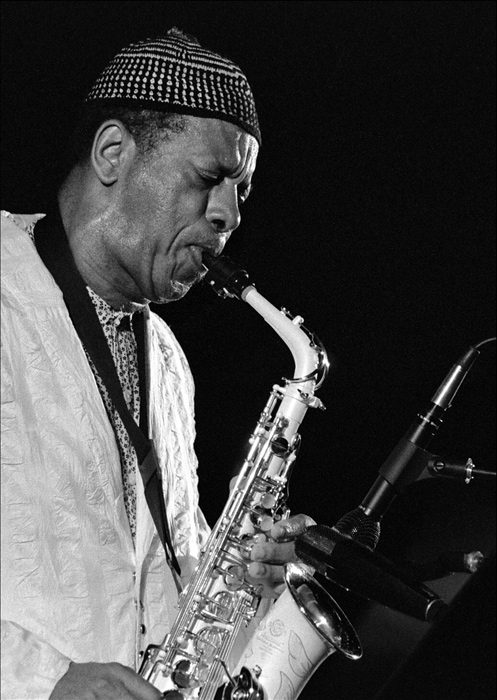
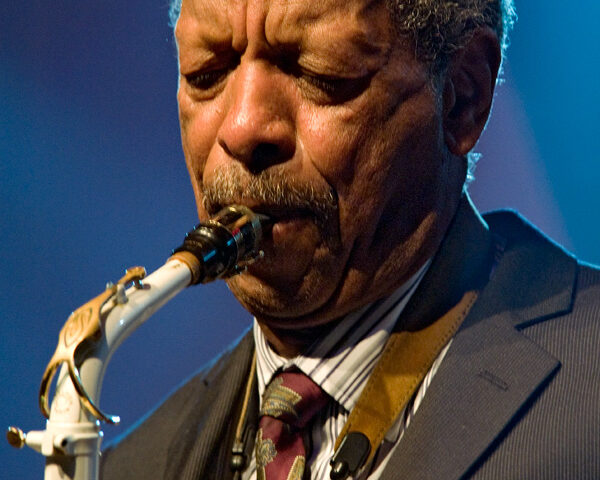
Ornette Coleman. Photo via Wikimedia Commons (CC BY-SA 2.0).
ADDRESS & CONTACT
Fort Worth gave the world Ornette Coleman — one musician who broke jazz in two and rebuilt it from scratch.
Coleman arrived on March 19, 1930, into a city shaped by Jim Crow. Black musicians played for each other because segregation gave them little other choice. Yet that enforced intimacy planted something no conservatory could have taught. Fort Worth’s blues, gospel, and street-corner rhythm were already in his bones before he picked up an instrument. He found one around age fourteen — the alto saxophone. Still, he taught himself mostly by feel, listening to everything the city offered.
In Fort Worth, Coleman attended I.M. Terrell High School, the city’s one Black high school. Inside those halls he found his tribe. Charles Moffett, Dewey Redman, Prince Lasha, and John Carter all walked those same corridors. And all five would go on to reshape American jazz. From a single segregated school in North Texas, the free jazz revolution drew most of its early talent.
The Sound Fort Worth Made
So Coleman left for Los Angeles in the early 1950s, arriving mostly broke and widely misunderstood. Fellow musicians thought he played out of tune. Some thought he was a fraud. But by 1959, Coleman had found his people — Don Cherry, Charlie Haden, and Billy Higgins. Together they recorded The Shape of Jazz to Come for Atlantic Records. Then the jazz world tilted on its axis.
His harmolodic theory turned jazz inside out. Now harmony, melody, and rhythm became equals — no hierarchy, no chord cage. Still, critics split down the middle. But Leonard Bernstein came to listen. And Miles Davis paid close attention.
Yet Fort Worth hadn’t forgotten him. In 1983, Coleman returned to help open Caravan of Dreams. The downtown venue featured a rooftop garden and a glass geodesic dome. Meanwhile, the mayor proclaimed September 29 “Ornette Coleman Day.” The Fort Worth Symphony performed his Skies of America. Coleman received the keys to the city — and he’d earned every tooth on them.
In 2007, his album Sound Grammar won the Pulitzer Prize for Music. He was only the second jazz musician ever to receive that honor. Coleman died in New York City on June 11, 2015. He rests at Woodlawn Cemetery in the Bronx, among Miles Davis, Duke Ellington, and W.C. Handy.
Fort Worth made him. He returned the favor by remaking jazz.